Virginia’s Grid Utilization Playbook Takes Shape
A first look into how Dominion and APCo plan to measure grid utilization based on their filings
A retired Dominion Energy power station in Virginia (© 2016 Kipp Teague/Flickr CC BY-NC-ND 2.0)
Virginia is writing the playbook for how states can bring down energy costs for families and businesses. Earlier this year, the Commonwealth passed a first-in-the-nation, bipartisan grid utilization bill and Deploy Action was proud to champion it. Since then, we’ve worked alongside our sister organization, Deploy Action Labs, to lay the groundwork for its successful implementation.
Now that work is paying off. In a major milestone, Dominion Energy and Appalachian Power Company (APCo) have filed their grid utilization metrics with the State Corporation Commission (SCC). These are serious proposals, and we applaud both utilities for putting them forward.
What is grid utilization?
The grid is planned for the highest-demand hours of the year plus a margin, which incentivizes power companies to pursue expensive upgrades that mostly serve rare peaks. That peak-driven model means about 50 percent of our grid's capacity sits idle most of the year and leaves regulators without consistent metrics to see where capacity is underused.
By relying on this outdated peak-driven model, power companies are essentially asking ratepayers to finance a system sized for the hottest hour of the year. Before we build more costly grid infrastructure, we should measure how much of it we’re actually using and squeeze more out of that idle capacity.
Getting the details right will be critical, and five issues stand out. These critiques point to both a need for more detail to show the utilities are looking alternatives to new poles and wires and to a need for more uniformity across the way the system utilization is measured:
1. Dominion wants to study first and commit later, APCo wants to move forward now
The two utilities take very different approaches to timing. Dominion proposes to study the issue before committing to how the metrics will be used, a process that could take up to five years. APCo, which serves a smaller set of circuits in the Commonwealth, already provides more detail across its system and appears ready to start now.
Dominion’s caution is understandable given the size and complexity of its system. But demand on the grid in Northern Virginia is rising fast, and five years is a long time to wait. Decisions about new poles and wires are being made today, and every year without clear metrics is another year of investments made without them.
2. The math undervalues rooftop solar, batteries, and flexible customers
Both utilities’ metrics leave much of the value of distributed energy resources (DERs) and flexible demand uncounted.
Dominion treats resources like rooftop solar and home batteries as added grid capacity. That sounds reasonable, but it creates a paradox: the more of these resources customers install, the emptier the grid looks on paper. Instead of showing how DERs help the system carry more load, the metric hides their contribution inside a lower utilization number.
Dominion’s scoring also gives little credit to customers who can shift when they use power, such as a data center that scales back during peak hours. The company concluded there was “no measurable flexibility” to count. As large, flexible loads become a bigger part of Virginia’s grid, that is a significant gap.
APCo’s filing has a similar blind spot. It briefly notes that non-wires alternatives, such as grid-enhancing technologies (GETs), could help avoid a new upgrade, though it says those decisions should be made case by case. Beyond that, the filing says nothing about DERs, storage, or flexibility. That stands out given APCo’s own finding that it has “adequate capacity” to leverage these tools, with winter peak load at just 54% of capacity.
These are fixable problems. Is there a fairer way to count DERs and load flexibility so they get the credit they deserve?
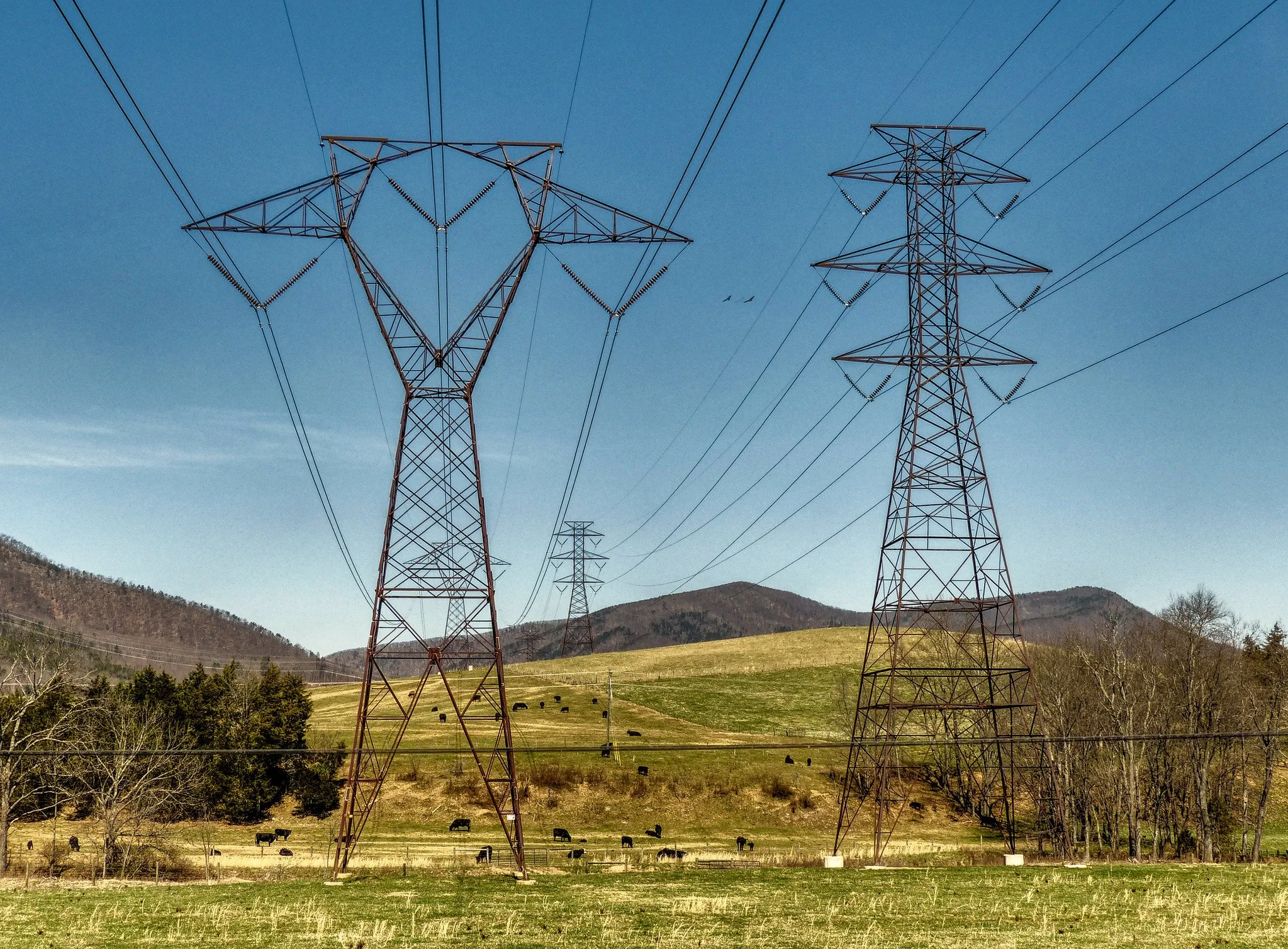
Transmission lines in Rockbridge County, Virginia (©2019 Kipp Teague/Flickr CC BY-NC-ND 2.0)
3. Cost recovery will be a sticking point
One of the most important parts of Virginia’s grid utilization law is that it lets the SCC consider utilization when deciding what costs utilities can recover from customers. The goal isn’t to require 100% utilization. It’s to make sure the grid is used efficiently, that non-wires alternatives (NWAs) are deployed where they make sense, and that ratepayers pay for new poles and wires only where and when they’re truly needed.
The utilities’ filings suggest this is where the hardest debates lie ahead.
Dominion presents its utilization metrics mainly as a screening tool. In its view, the metrics can flag where to look more closely, but they shouldn’t decide whether a project is prudent or whether its costs can be recovered from customers. That reading leaves out one of the law’s core purposes.
APCo asks for more granular metrics rather than a single system-wide standard. That’s a reasonable request, since conditions vary across a service territory. But APCo also frames alternatives to poles and wires as a case-by-case question, which stops short of making them a routine part of how investments are evaluated.
The use of utilization metrics to inform cost recovery discussions moves this data beyond mere reporting into an active tool to protect ratepayers.
4. We can only see a small slice of the picture
Dominion reports that 82 of its roughly 1,900 feeders are already over their planned limits. That’s useful information. But most of the company’s other figures are system-wide averages rather than line-by-line data, and averages can hide exactly the problems these metrics are meant to catch. A system that looks healthy overall can still have congested lines that need attention, and lightly used lines that could absorb more load before anyone builds something new.
That raises a basic question: do regulators have what they need to evaluate the other 1,800 or so feeders?
APCo shows that more is possible. Its filing provides full system detail, along with a public list of constrained circuits identified by station and circuit name. That level of transparency lets regulators, developers, and the public see where the grid is under strain and where alternatives could help.
5. Dominion sets its own safety cushions, and they shape the results
To avoid outages, utilities keep spare capacity in reserve in case equipment fails. That’s standard practice, and it’s an important part of keeping the lights on.
But the size of that cushion is a choice, and Dominion made it. The company reserves 70% of the capacity of the largest transformer at each substation, and 20% of the capacity of most power lines, with exceptions for lines serving data centers and factories. Those choices directly affect the results: the bigger the cushion, the more heavily utilized the grid looks at times of strain, and the stronger the case for building more.
APCo takes a different approach. It doesn’t call for that kind of cushion, and instead treats a circuit as constrained once its forecast load reaches 90% of capacity.
Two utilities measuring the same thing in such different ways raises important questions. Can regulators reconcile these approaches? And can they question or change the cushions utilities set for themselves? The SCC’s authority to approve the metrics should reasonably extend to how they’re calculated, but that question isn’t settled yet.
A vital first step for making grid utilization real in the Commonwealth, with work ahead
Dominion and APCo’s filings are an important first step, and both utilities deserve credit for taking this work seriously. But the details will decide whether grid utilization delivers on its promise for Virginia families and businesses.
We look forward to continuing to make the case to the SCC that the final metrics inform a meaningful useful conversation on where to defer new build and where new grid investment is needed across the Commonwealth. This is a major opportunity to put downward pressure on rates while informing where the most impactful new investment or load flexibility are needed to meet load growth.
Virginia set out to write the playbook for using the grid more efficiently and keeping costs down. Other states are watching. Deploy Action and Deploy Action Labs look forward to working with the SCC, the utilities, and stakeholders to make sure that playbook is one worth following.