The Tech Giants Behind Data Centers Need to Read the Room
The links between data centers, trust, and clean energy; how wind and solar kept the lights (and the AC) on while temperatures soared; and more.
Welcome to The Grid Unlock, where we focus on the tangible steps we can take to overcome the bottlenecks and barriers to transforming our energy system. Subscribe today and join a community of energy leaders and advocates focused on turning "gridlock" into The Grid Unlock.
🔑 Key insight: A tailwind when it mattered most
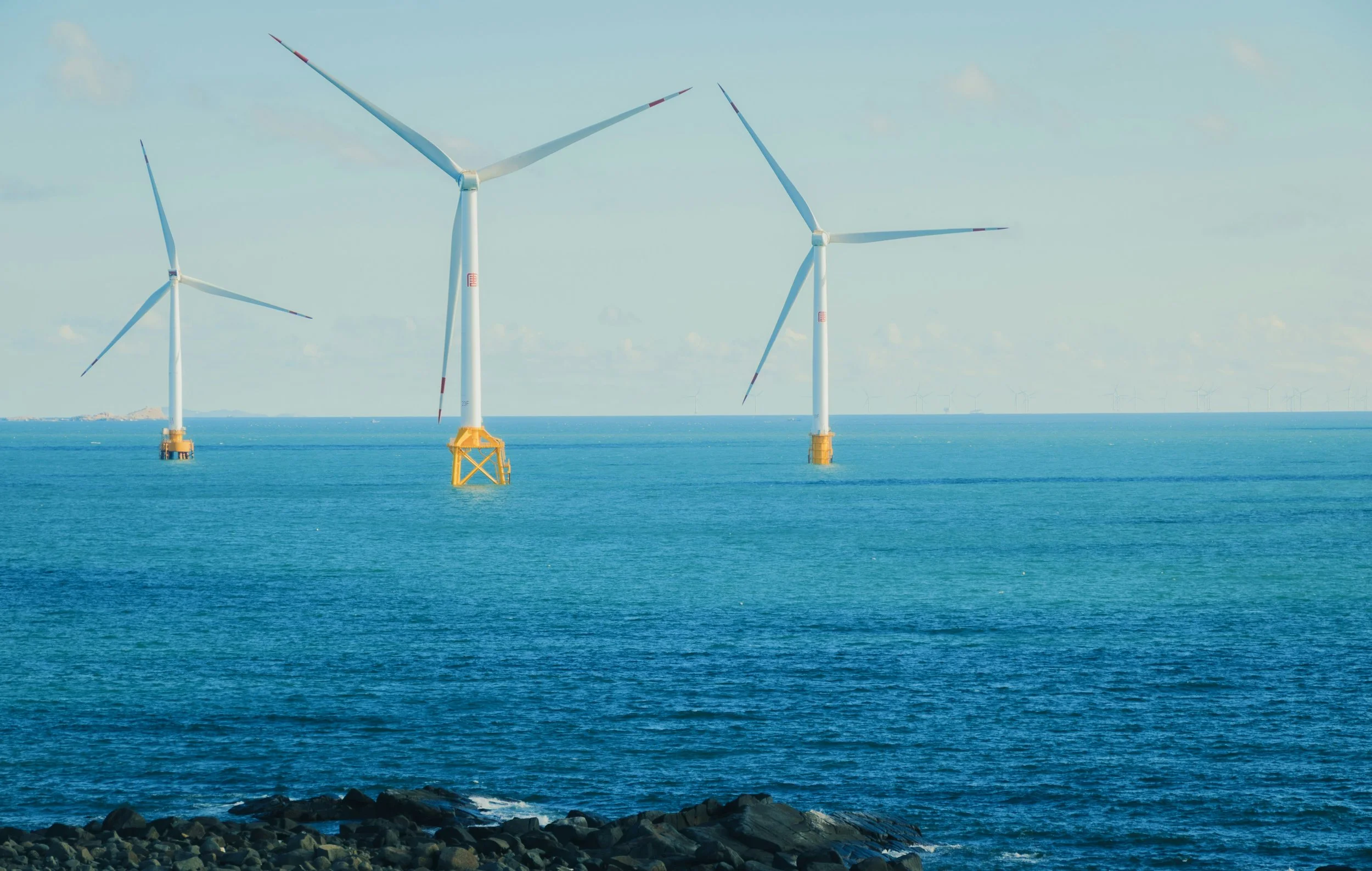
When the heatwave rolled in, turbines stepped up. We’re not talking about box fans or ACs: We’re talking real wind power.
Earlier this month, a sweltering heat wave pushed many of us to our limit – New England's grid included. Last year, during a similar stretch, the region got nearly 15% of its peak power from dirty, expensive oil-fired peaker plants. This year, with Vineyard Wind and Revolution Wind online, oil's share dropped below 10%. Total oil-fired generation across the four-day event fell 37% compared to a 2025 heatwave.
The grid didn't just survive the heat wave. It handled it better, cleaner, and cheaper.
Offshore wind has faced relentless attacks: stop-work orders, lease pauses, and most recently, billions in taxpayer money paid by the Trump administration to developers to abandon future projects. Their argument has been that it's unreliable, expensive, and seasonal. The July data from Grid Status says otherwise.
And solar pulled its weight during the excruciating heat, too. Rooftop and distributed solar saved New Englanders an astonishing $130 million in just one week, according to data from the Acadia Center. It’s clear: Clean energy is a win for affordability and grid reliability, especially when we need it most.
Contrast that with PJM, the Mid-Atlantic grid operator. During a separate bout of extreme heat this summer, PJM pushed up against its all-time demand record and only held on by using federal emergency orders to curtail data centers and waive power-plant pollution limits, its third such emergency this year. Wholesale prices briefly topped $2,500 per megawatt-hour, about 60 times the normal rate.
That’s why tools like California’s Demand Side Grid Support program are so vital. It’s the largest virtual power plant in the world–a massive, invisible power plant hidden in plain sight made up of a web of home batteries, smart thermostats, and other tech working in unison to ease demand and pump electricity back into the grid when it’s strained for power.
This common-sense program needs continued budget authorization to survive. Luckily, a few weeks ago the legislature approved alternative financing for sustaining the program short-term.
However, Governor Newsom had previously proposed moving that money from the California Energy Commission to the Public Utilities Commission. But DSGS is already delivering reliability and affordability for California ratepayers – and while it needs additional reforms, it should stay where it is. Because if it ain’t broke, don’t fix it.
🔦 Spotlight: Data centers need to read the room
The data center backlash is real and spreading: 120 moratoriums across 38 states. New York became the first state to impose a statewide moratorium on new hyperscale data centers, with Gov. Hochul's July executive order pausing permits for facilities drawing 50 MW or more for up to a year while the state writes ratepayer and grid protections. And with 36 governors' races this fall, the political pressure to be seen as anti-data center is only intensifying.
“There is a large element of just animal spirit to this. People feel like rich, powerful people are running rampant. This is the only piece of it that they have any control over, so they’re grabbing onto it and blocking it.”
On a new episode of Energy Empire, our executive director Arnab Pal joins Jigar Shah and Dave Roberts from Volts to discuss why the data center backlash is a trust problem and what it has to do with clean energy.
The AI boom and the clean energy boom are actually deeply intertwined stories.
To win the AI race, tech companies need to build (and power) data centers now. Clean energy (especially solar and batteries) is the only thing that can supply power fast enough to keep up with AI's giant appetite for electricity. Whereas building new electricity supply the old-fashioned way with a gas power plant would take years of permitting and construction.
If tech companies were smart and leaned into this connection instead of hiding from it, they'd have a much better story to tell: Something like, "We're building this data center AND because we need power fast, we're putting solar panels on your roof and a battery in your garage—which also lowers your bill and makes the grid more stable for everyone." Instead, they’re running roughshod over communities and collapsing public trust.
As Arnab said, “Fear is winning. It's the fear of AI, the fear of data centers, the fear of the tech companies. The only way to beat that is to offer real hope.”
The message is not "here's why you're wrong to be scared" — but "here's how this revolution cuts you in."
Not every state is pushing pause on data centers. In early July, Delaware's legislature passed HB 233 (Rep. Frank Burns and Sen. Stephanie Hansen), a different approach than in New York: it puts large energy users like data centers in their own rate class so they pay the full cost of the power they demand, and makes them first to be curtailed when the grid is stressed unless they bring their own generation. Essentially, it’s a way to say yes to data centers without handing the bill to families. It now sits with Gov. Meyer, who has signaled support.
Bottom line from the Energy Empire episode? If governors can say to their constituents that they made sure a data center will fund community solar, make bills cheaper, and install local batteries, then they can win on the issue instead of just running from it.
👀 What else we’re reading
→ “How global energy production is changing, in 6 charts” (Pew Research Center): Global electricity generation has more than doubled since 2000, and renewables have driven most of the growth. And solar panel prices have fallen by more than 99% since 1975—from $128 per panel to $0.26.
→ “Clean energy still beats fossil fuels on cost, despite, well, everything” (Lazard LCOE report via Canary Media Inc.): Clean energy still beats fossil fuels on cost, despite tariffs, lost tax credits, high interest rates, and every other headwind thrown at it. The economic case for clean energy remains strong.
→ “We’ve spent the last century building a bigger grid… The next chapter is about building a smarter one.” (Jennifer Granholm) – The former Secretary of Energy has a way of breaking down grid utilization in a way that feels super tangible and straightforward. As she explains, “Every megawatt we unlock through better software is a megawatt customers don’t have to pay to build tomorrow.”
→ "House moves to make data centers pay their own way" (House Committee on Energy and Commerce): On July 20, the committee advanced the bipartisan Ratepayer Protection Act (H.R. 9340) by a unanimous 52 to 0 vote, sending it to the full House. Sponsored by Reps. Gabe Evans (R-CO) and Kathy Castor (D-FL), this bill would have states require the largest energy users (100 MW or more at one site) to pay the full cost of the generation and grid upgrades built to serve them, keeping those costs off everyday ratepayers.
📥 Don’t miss the next edition
Our energy system is running on dial-up in a fiber-optic world. The Grid Unlock is the newsletter for people tired of the past-tense approach. We’re ditching doom-scrolling for a toolkit of solutions, highlighting the policies and people moving our energy infrastructure into the modern age.