
We Can’t Keep Planning Our Grid Like It’s 1999
Plus: The biggest wind farm in the US is officially online; the fate of the program that could save Californians $206 million on their electricity bills; and more.
Welcome to The Grid Unlock, where we focus on the tangible steps we can take to overcome the bottlenecks and barriers to transforming our energy system. Subscribe today and join a community of energy leaders and advocates focused on turning "gridlock" into The Grid Unlock.
🔑 Key Insight: Grid utilization may soon be law in the Golden State
Rising power bills aren’t inevitable. They are a solvable policy problem. And we should reward utilities for results—affordable bills and faster connections—not just for building more stuff. California’s SB 905 would do just that.
A few weeks ago, SB 905 passed the California Senate and just yesterday, it cleared another big hurdle: passing the Assembly Committee on Utilities and Energy after earning a favorable vote from Committee Chair Petrie-Norris. The bill is not yet law—but this is meaningful momentum, and the window to finish the job is now.
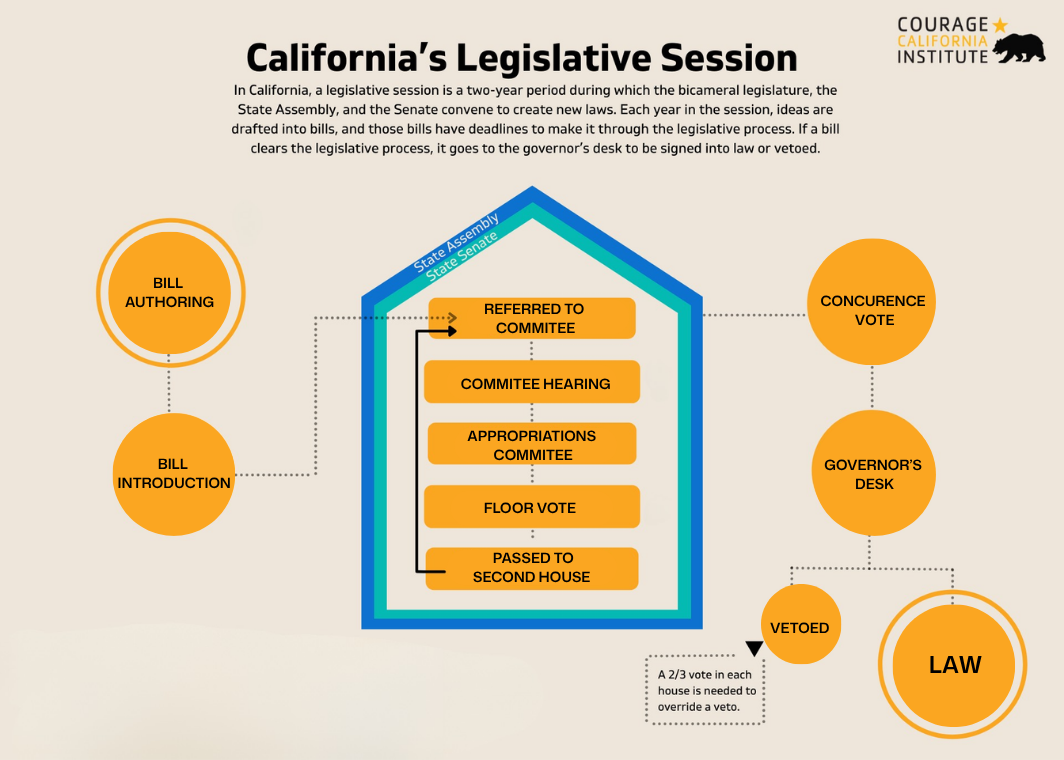
SB 905 will now move to appropriations in the Assembly. (Graphic: California Courage Institute)
The bill (authored by Sen. Josh Becker and co-sponsored by Sen. Henry Stern) would allow the California Public Utilities Commission to set real targets for how efficiently utilities are actually using the grid–much like Virginia did earlier this year. The Commission would collect and use grid utilization data to inform where new grid investments can best meet expected future demand growth or where load flexibility or DERs could meet those grid needs cheaper than traditional upgrades.
This just makes sense. We can’t keep just planning for peak like it’s 1999. Regulators, policymakers, and all Californians deserve clear, publicly accessible information about how efficiently the grid is being used before being asked to foot the bill for building new poles and wires.
Right now, that information simply doesn't exist in any standardized, publicly available form. Utilities submit maps and data of wildly varying quality: often outdated, noncomparable, or so obscured they aren't useful to anyone, including regulators at the CPUC.
Here’s what else the bill does:
Importantly, SB 905 also ties 20% utility executive compensation to how well they deliver on affordability. As Sen. Becker said so succinctly, “If you can't keep rates from rising, then you don't get the bonus.” Right now, the incentive structure runs the other way: utilities earn higher profits by spending more money and passing the costs to ratepayers.
SB 905 also puts downward pressure on utilities’ return on equity (ROE) earned by recovering capital costs for infrastructure investments by requiring the Commission to review where ROE can be reduced for investments that carry less risk or are where such costs are more readily recovered.
And the legislation requires the CPUC to establish performance-based metrics for utilities to deliver power based on set targets to promote safe, clean, and reliable electrical service at the lowest cost to ratepayers.
Bottom line? Electricity affordability has become a defining issue for California families and businesses and Sacramento is starting to act like it.
➡️ Take a deeper dive: Sen. Becker breaks down SB 905 with Arnab Pal and Jigar Shah on Energy Empire and it's one of the most useful 40 minutes you can spend on grid utilization.
🔦 Spotlight: California's most underrated grid tool deserves to survive
When California's grid is strained on a super-hot afternoon, you might assume the only answer to solve the problem in the long term is to build more traditional power plants. The Demand Side Grid Support program (DSGS) proves otherwise. It pays households with devices like smart thermostats, solar panels, and home batteries to feed power back to the grid exactly when it's needed most. No new poles. No new wires. Just a smarter use of what's already there to make the largest distributed power plant in the world.
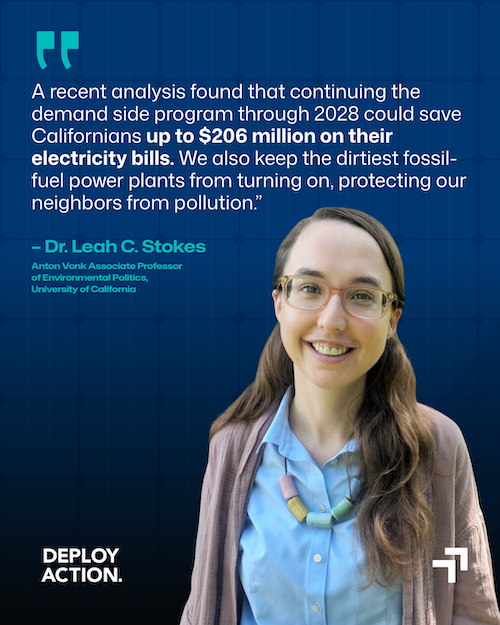
As Dr. Leah Stokes (whose home is part of the program) wrote in the San Francisco Chronicle, "because we kick in during the most expensive hours—automatically, whenever wholesale prices spike above $200 per megawatt-hour—we lower electricity bills for every Californian. A recent analysis found that continuing the demand side program through 2028 could save Californians up to $206 million on their electricity bills.”
Here's the catch: the program needs continued budget authorization to survive. It isn't glamorous legislation, but killing this program would mean replacing distributed, affordable grid support with expensive new infrastructure that ratepayers would foot the bill for.
DSGS is an example of the grid we actually want: one where we act as active participants, not just passive consumers waiting for the next rate hike.
📖 What else we’re reading
Paul Krugman weighs in on the economics of clean energy: “The whole world now knows that relying on imported fossil fuels is a major economic and security risk. By contrast, the sun will shine and the wind [will] blow, whatever may be happening overseas. Renewables were already rapidly becoming cheaper than fossil fuels. Now it’s clear that they are also far safer.”
The biggest clean energy project in US history is officially delivering power: Three times bigger than any US wind farm ever built before, SunZia houses nearly 1000 turbines in New Mexico and can produce 3.65 GW of electricity for a million homes. That’s more powerful than the Hoover Dam.
This spring, clean energy in the US set record after record: For the first time in US history, solar generated more electricity than coal in May. Wind and solar combined to beat gas globally in April. California is showing that solar power and batteries can keep the power on when the sun isn’t shining. It’s clear that the “alternative” energy of yesterday is the juggernaut of today—and our grid policy needs to catch up.
📥 Don’t miss the next edition
Our energy system is running on dial-up in a fiber-optic world. The Grid Unlock is the newsletter for people tired of the past-tense approach. We’re ditching doom-scrolling for a toolkit of solutions, highlighting the policies and people moving our energy infrastructure into the modern age.
Subscribe to hear about the leaders, advocates, and ideas finally clearing the path toward a modern, resilient energy future.